Magnesium Glycinate for Lung Health: How It Works and What to Look For on the Label
| What it is | Magnesium bound to the amino acid glycine — a chelated, well-tolerated form of an essential mineral. |
| Why for lungs | Magnesium is involved in normal muscle function, including the smooth muscle of the airways, and in the body’s antioxidant and energy pathways. |
| Label tip | Compare products by elemental magnesium (the actual magnesium delivered), not the total compound weight. |
| Context | Adults need roughly 310–420 mg/day from all sources; a supplement fills gaps, it does not replace food. |

Magnesium is one of those quietly essential minerals that shows up in almost every conversation about muscle relaxation, energy and calm — yet many people do not connect it with breathing. Of the many magnesium forms on the shelf, magnesium glycinate has become a favourite for daily-use formulas, and it appears in respiratory-support products such as Lungora. This guide explains what magnesium glycinate actually is, the mechanisms that tie magnesium to relaxed, comfortable breathing, and — just as important — how to read a label so you know what you are really getting. Everything here is general nutritional information, not medical advice or a treatment claim.
What magnesium glycinate for lung health really means
Start with the chemistry, because it explains everything that follows. Magnesium is a metal that the body cannot absorb on its own; it has to be paired with a carrier molecule to form a stable compound. Magnesium glycinate (also called magnesium bisglycinate) is magnesium bonded to two molecules of glycine, the smallest amino acid. That pairing is called a chelate, from the Greek word for claw, because the amino acid effectively wraps around the mineral and shepherds it through the digestive tract.
Why does that matter for a phrase like “magnesium glycinate for lung health”? Because the form determines two practical things: how much magnesium your body can actually take up, and how gently it treats your gut. Glycinate scores well on both. It is generally well absorbed, and because it does not draw large amounts of water into the bowel the way some cheaper salts do, it is far less likely to cause the loose stools that give magnesium its laxative reputation. For a nutrient you may take every day to support respiratory wellness, tolerability is not a footnote — it is the difference between a habit you keep and one you quietly abandon.
The mechanism: how magnesium is involved in relaxed breathing
Magnesium is a cofactor in more than 300 enzymatic reactions, which is a scientific way of saying it is a key that unlocks a huge share of the body’s everyday chemistry. Several of those roles connect logically to the respiratory system. Be careful how far you carry this: the strongest clinical magnesium-and-airway evidence comes from intravenous magnesium in acute asthma exacerbations (Cureus, 2022) — a hospital treatment given by drip during a severe attack, not a daily capsule, and not a reason to expect the same from one.
1. Smooth-muscle tone in the airways
The airways are lined with smooth muscle that tightens and relaxes to regulate airflow. Magnesium acts, in part, as a natural counterbalance to calcium: calcium tends to drive muscle contraction, while magnesium supports the relaxation phase. Adequate magnesium status therefore supports the body’s normal capacity for relaxed muscle tone throughout the body, the airway smooth muscle included. This is a general physiological role, not a claim that magnesium opens airways or treats any breathing condition. The population-level observation that started this line of interest was Dietary magnesium, lung function, wheezing, and airway hyperreactivity in a random adult population sample (Lancet, 1994) — an association study, not a trial.
2. Energy production in oxygen-hungry tissue
Every cell that moves air — from the diaphragm to the tiny muscles between your ribs — runs on ATP, the body’s energy currency. ATP is biologically active only when bound to magnesium; the working molecule is literally Mg-ATP. So the tissues that do the mechanical work of breathing depend on magnesium to use their fuel at all. You can read more about the energy side of respiratory support in our guide to choosing a CoQ10 form for cellular energy.
3. A partner to the antioxidant system
The lungs sit at the interface between the body and the outside air, so they meet a steady stream of oxidants from pollution, smoke residue and ordinary metabolism. Magnesium supports the body’s own antioxidant defences, including the synthesis and function of glutathione, one of the master antioxidants. That makes it a natural teammate for the dedicated antioxidants often paired with it in a formula — a topic we cover in our article on alpha lipoic acid benefits for the lungs.
Reading the label: elemental magnesium is the number that counts
Here is the single most useful label-reading skill for magnesium of any kind. A magnesium compound is never 100 percent magnesium by weight — part of that weight is the carrier. With glycinate, a meaningful fraction of the compound is glycine; with oxide, part of it is oxygen. The figure that tells you how much actual mineral you receive is the elemental magnesium. Form matters for absorption as well as for tolerance; the glycinate-versus-oxide comparison most often cited is Bioavailability of magnesium diglycinate vs magnesium oxide in patients with ileal resection (JPEN J Parenter Enteral Nutr, 1994).
A well-written Supplement Facts panel lists magnesium by its elemental amount in milligrams and shows the percent Daily Value beside it (the DV for magnesium is 420 mg). If a label shouts “1,000 mg magnesium glycinate” but never states the elemental figure, treat that as a prompt to dig deeper, because the elemental content could be a fraction of that headline number. When you compare two products, compare their elemental magnesium and their percent DV — that is the apples-to-apples measure.
- Form named clearly — “magnesium glycinate” or “magnesium bisglycinate”, not just “magnesium”.
- Elemental amount + %DV — the real magnesium delivered per serving.
- Serving size — check whether the stated amount is per capsule or per multi-capsule serving.
- Transparent blends — be cautious of large proprietary blends that hide how much magnesium is actually present.
What Is Inside a Lungora Capsule
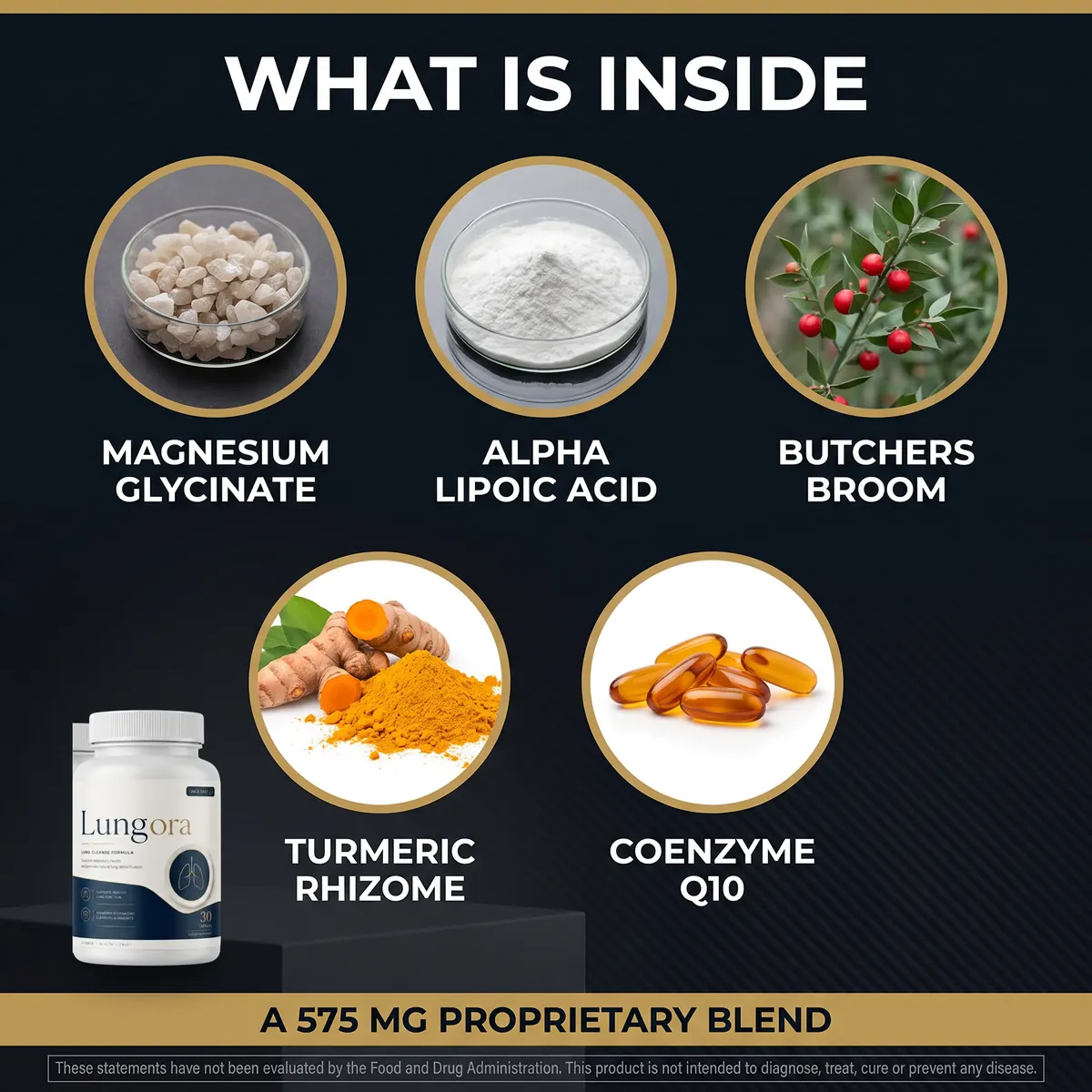
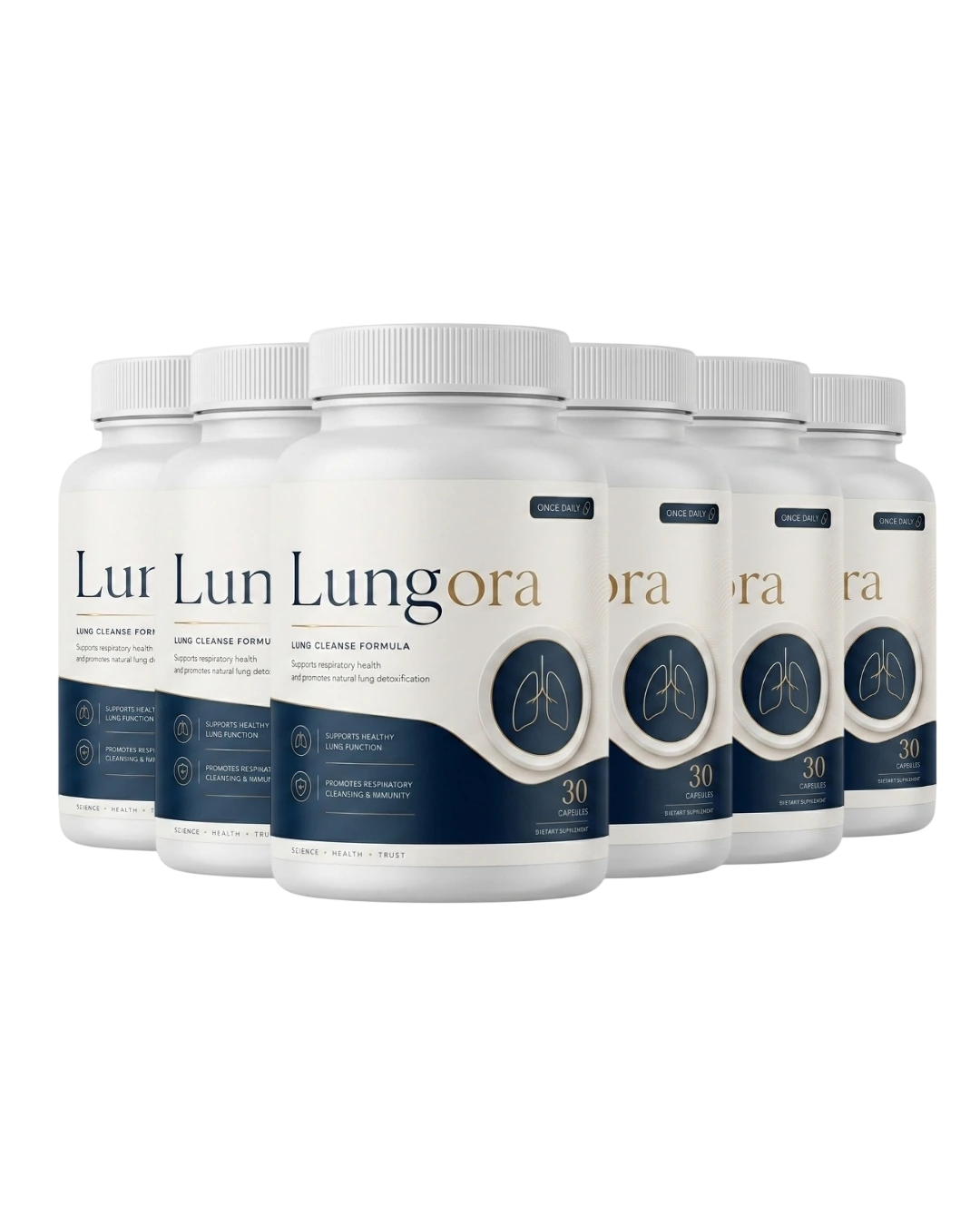
Lungora puts magnesium glycinate, alpha lipoic acid, butcher’s broom, L-carnitine, turmeric extract and CoQ10 in one capsule a day, labelled to support respiratory health, with a 60-day money-back guarantee from purchase.
Dosing context: how much, and alongside what
The National Institutes of Health Office of Dietary Supplements sets the Recommended Dietary Allowance for magnesium at roughly 310–320 mg per day for adult women and 400–420 mg for adult men, counting all sources — food first. Because leafy greens, nuts, seeds, legumes and whole grains are rich in magnesium, a supplement is best understood as a top-up for the gap between what you eat and what you need, not a replacement for a good plate. Upper limits for supplemental magnesium, and its interactions with antibiotics, diuretics and bisphosphonates, are listed in the NIH Office of Dietary Supplements magnesium fact sheet
Supplemental doses in daily formulas are usually modest by design, because they are meant to complement dietary intake rather than deliver a full day’s requirement in one capsule. The Tolerable Upper Intake Level for supplemental magnesium in adults is 350 mg per day — a ceiling that applies to magnesium added on top of food, and one reason quality formulas keep their magnesium sensible rather than sky-high. If you are unsure what is right for you, a pharmacist or physician can help, particularly if you take other medicines or have reduced kidney function, since the kidneys regulate magnesium balance.
Who tends to be low in magnesium
Surveys consistently suggest that a large share of adults fall short of the recommended magnesium intake from diet alone. Several everyday factors nudge magnesium status downward: diets heavy in ultra-processed foods, high alcohol intake, chronic stress, certain digestive conditions that reduce absorption, and some common medications. Older adults absorb less and excrete more, so the gap can widen with age. None of this is a diagnosis — it is simply context for why a gentle, well-absorbed form like glycinate is a popular choice for people who want steady daily support.
How magnesium fits a whole respiratory routine
A single nutrient is never the whole story. Magnesium works best as one part of a broader approach that also includes clean indoor air, regular movement, deliberate breathing practice and an antioxidant-rich diet — the everyday habits we lay out in how to support healthy lung function naturally. Inside a formula, magnesium glycinate is typically paired with dedicated antioxidants and circulatory botanicals so the pieces reinforce one another: the mineral supports muscle and energy function, the antioxidants help manage oxidative load, and the botanicals support healthy circulation. You can see how those roles combine on the Lungora home page. Magnesium keeps the enzymes running; getting fat into the mitochondria in the first place is the job described in our guide to the carnitine forms and what each is for.
Think of it as a stack, not a single hero ingredient. If you want the antioxidant side of that stack explained in the same plain language, our piece on alpha lipoic acid for the lungs is the natural next read.
Frequently asked questions
Why is magnesium glycinate used instead of magnesium oxide?
Magnesium glycinate is magnesium bound to the amino acid glycine. This chelated form is generally well absorbed and tends to be gentle on the stomach, so it is less likely to cause the loose stools that high doses of poorly absorbed forms such as magnesium oxide can trigger. That combination of tolerability and absorption is why formulators often choose it for daily-use products.
How does magnesium relate to breathing?
Magnesium is a cofactor in hundreds of enzyme reactions and is involved in normal muscle function, including the smooth muscle that lines the airways. Adequate magnesium status supports the body’s normal capacity for relaxed muscle tone. This is general nutritional information and not a treatment claim.
What does elemental magnesium mean on a label?
A magnesium compound is only part magnesium by weight; the rest is the carrier such as glycine or oxide. Elemental magnesium is the amount of actual magnesium you receive. A well-written label states the elemental figure and its percent Daily Value, so compare products by elemental magnesium rather than the total compound weight.
How much magnesium do adults typically need?
The Recommended Dietary Allowance set by the National Institutes of Health is roughly 310 to 420 mg of magnesium per day for adults from all sources, food included. Supplements are meant to fill gaps rather than replace a balanced diet. Speak with a healthcare professional before adding a supplement, especially if you take medication or have kidney concerns.
Can I take magnesium glycinate every day?
Many people use a modest daily dose of magnesium glycinate as part of a routine, and it is commonly included in once-daily formulas. Stay within the amount on the label, treat it as a complement to food, and consult a qualified professional about your individual situation.
Does magnesium glycinate interact with medications?
Magnesium can interact with certain antibiotics, bisphosphonates and some other medicines, often by affecting absorption if taken at the same time. It can also matter for people with kidney disease. This is exactly the kind of question to raise with your pharmacist or doctor, who can review your full medication list.
About the Lungorae Editorial Desk
The Lungorae Editorial Desk is an independent group of wellness writers and reviewers focused on respiratory nutrition. We translate primary sources — government nutrition bodies, peer-reviewed literature and established reference texts — into plain, practical guidance, and we review each article for accuracy before publication. We do not provide medical advice; our aim is to help you ask better questions and read labels with confidence. Have a correction or a source to suggest? Write to the editor through the contact page.
References
- Dietary magnesium, lung function, wheezing, and airway hyperreactivity in a random adult population sample — Britton J et al., The Lancet, 1994.
- Bioavailability of magnesium diglycinate vs magnesium oxide in patients with ileal resection — JPEN: Journal of Parenteral and Enteral Nutrition, 1994.
- Role of Intravenous Magnesium in the Management of Moderate to Severe Exacerbation of Asthma: A Literature Review — Cureus, 2022. Hospital intravenous use, which is not what an oral capsule does.
- Magnesium — Health Professional Fact Sheet — NIH Office of Dietary Supplements.
Every PubMed identifier above was checked against its NCBI record when this guide was written, so each link opens the paper it is named as. Research on an ingredient is not research on a finished product, and none of these studies tested the Lungora capsule.
† These statements have not been evaluated by the FDA. This product is not intended to diagnose, treat, cure or prevent any disease. This article is for general information only and is not medical advice; new or worsening breathlessness needs a doctor, not a supplement. Affiliate disclosure: this is an independent guide, not the manufacturer or seller, and some links here earn us a commission at no extra cost to you.