Omega-3 Fish Oil for Lung Health: How EPA and DHA Work
| What it is | The long-chain marine omega-3 fatty acids EPA and DHA, mostly from oily fish. |
| Why for breathing | They build into cell membranes and shift the body toward calmer inflammatory signals, plus form pro-resolving mediators that help inflammation switch off cleanly. |
| Label tip | Read the EPA + DHA amount, not the total “fish oil” weight. |
| Best taken | With a meal containing fat; choose a fresh, purity-tested oil. |

Few supplements are as widely taken — or as widely misunderstood on the label — as fish oil. Most people know it is “good for you,” but far fewer know that the benefit comes from two specific fatty acids, that the number on the front of the bottle is usually not the number that matters, and that freshness makes or breaks the product. In respiratory wellness, omega-3 fish oil earns its place because the airways, like every tissue, depend on the body’s ability to keep inflammation in balance — and that is exactly what these fats help govern. This guide explains how omega-3s work for lung health, how to decode the label, and how to choose a good oil. It is general educational information, not medical advice or a promise to treat any condition.
What omega-3 fish oil actually is
Omega-3s are a family of essential fatty acids — essential meaning the body cannot make them and must get them from food. There are three that matter. ALA (alpha-linolenic acid) is the short-chain plant form found in flax and walnuts; the body converts only a small fraction of it into the long-chain forms that do the heavy lifting. Those long-chain forms are EPA (eicosapentaenoic acid) and DHA (docosahexaenoic acid), and they come mainly from oily fish such as sardines, anchovies, mackerel and salmon, which in turn get them from marine algae. Fish oil supplements are simply a concentrated, convenient source of EPA and DHA.
This distinction is the reason plant oils and fish oils are not interchangeable: it is the pre-formed EPA and DHA that the research on inflammation and membranes is built on, and that is what a fish oil supplement delivers directly rather than relying on a poor conversion step.
The mechanism: how omega-3s support respiratory wellness
Omega-3s influence the airways along three connected paths, and each is a genuine structure-and-function role rather than a claim to treat disease.
1. Building better cell membranes
EPA and especially DHA are incorporated directly into the phospholipid membranes of your cells, including those lining the airways. Membranes rich in omega-3 behave differently from membranes dominated by omega-6 fats — they change how cells signal and respond. In a modern diet heavy in omega-6 vegetable oils, adding EPA and DHA is partly about rebalancing that ratio at the membrane level.
2. Shifting the inflammatory signals
When the body needs to mount an inflammatory response, it converts membrane fatty acids into signalling molecules called eicosanoids. Omega-6 arachidonic acid tends to produce more strongly pro-inflammatory versions; EPA competes for the same enzymes and yields calmer, less inflammatory versions instead. The result is not the shutting down of inflammation — which is a necessary defence — but a gentler, better-regulated tone, which is what comfortable airways rely on. How the network of these mediators is produced and what each one does is updated in Specialized pro-resolving mediator network: an update on production and actions (Essays Biochem, 2020).
3. Actively resolving inflammation
The most exciting modern finding is that EPA and DHA are the raw material for specialised pro-resolving mediators (SPMs) — resolvins, protectins and maresins. These are not merely anti-inflammatory; they actively signal inflammation to resolve and the tissue to return to normal. This helps explain why omega-3s are discussed as supporting the airways’ ability to calm down cleanly after a challenge, tying into the wider antioxidant-and-balance network we describe in our guide to alpha lipoic acid and the antioxidant network. Resolution as an active, signalled process rather than inflammation simply fading out is the argument made in Resolvins in inflammation: emergence of the pro-resolving superfamily of mediators (J Clin Invest, 2018).

Reading the label: EPA + DHA, not “fish oil”
This is the label lesson that catches almost everyone. A capsule proudly labelled “1,000 mg fish oil” often contains only around 300 mg of actual EPA plus DHA — the rest is other fats. Two products can list the same total oil weight and yet differ two- or three-fold in their real omega-3 content. So the number to find and compare is the combined EPA + DHA per serving, which reputable brands print clearly, along with the serving size (sometimes two or three capsules, not one). Add those up before deciding a product is good value.
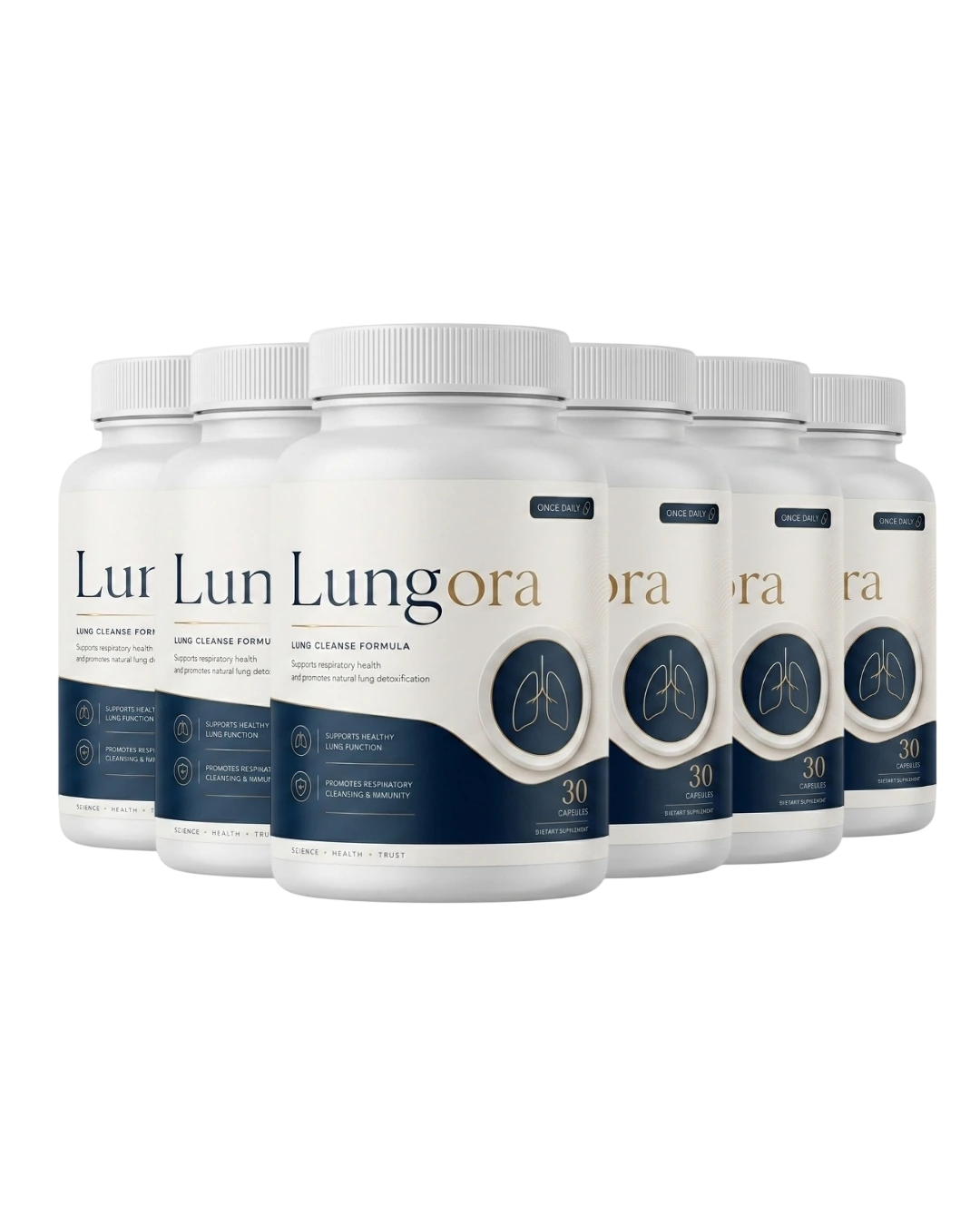
What Is Inside a Lungora Capsule
Lungora puts magnesium glycinate, alpha lipoic acid, butcher’s broom, L-carnitine, turmeric extract and CoQ10 in one capsule a day, labelled to support respiratory health, with a 60-day money-back guarantee from purchase.
Triglyceride, ethyl ester or phospholipid?
Fish oil comes in a few chemical forms, and the difference affects absorption:
- Natural triglyceride (TG) — close to how omega-3s occur in fish; generally well absorbed, though usually less concentrated.
- Ethyl ester (EE) — a processed form that allows very high EPA and DHA per capsule. It is a legitimate, widely used form, though some studies suggest it absorbs a little less readily than triglyceride, especially without a fatty meal.
- Re-esterified triglyceride (rTG) — concentrated like ethyl ester but converted back to the triglyceride backbone, aiming to combine potency with good absorption.
- Phospholipid form (krill oil) — omega-3s bound to phospholipids; typically lower dose per capsule but well absorbed.
No single form is essential for everyone. The triglyceride and re-esterified triglyceride forms are often preferred for absorption, but a good ethyl ester taken with food works well too. Concentration, purity and freshness matter more than the form label alone.
Dosing context: how much, and with what
For general wellness, common intakes aim for roughly 250 to 1,000 mg of combined EPA plus DHA per day, and many nutrition bodies suggest at least a couple of servings of oily fish weekly as the food-first route. Higher amounts are sometimes used under professional guidance. Two practical points make a real difference: take omega-3s with a meal that contains some fat, which markedly improves absorption, and split larger doses across the day if you notice fishy repeat. As with every active on this site, consistency over weeks matters more than any single dose. For intake ranges, the bleeding-risk question and interactions with anticoagulants, the NIH Office of Dietary Supplements omega-3 fact sheet is the plainest reference.
Freshness, purity and safety
Because omega-3s are polyunsaturated, they are prone to oxidation — going rancid — and an oxidised oil is the opposite of what you want. Favour a product with a low reported oxidation value (sometimes shown as TOTOX), a fresh, mild smell, and opaque packaging; store it cool and dark, and refrigerate liquid oils. Purity matters too: reputable brands publish third-party testing for heavy metals such as mercury, and for PCBs and dioxins, since these can concentrate in fish. On safety, omega-3s are well tolerated, but at higher doses they can have a mild blood-thinning effect, so anyone on anticoagulant medication or approaching surgery should check with a healthcare professional first.
What to look for on a fish oil label
- Combined EPA + DHA per serving — the real active number, not total oil weight.
- Serving size — check how many capsules make up the stated dose.
- Form — triglyceride or re-esterified triglyceride for absorption; ethyl ester is fine with a fatty meal.
- Purity and freshness — third-party heavy-metal testing and a low oxidation value.
- Sustainable source — small, short-lived fish such as anchovies and sardines carry fewer contaminants.
How omega-3s fit the bigger picture
Omega-3 fish oil is a foundational fat rather than a headline botanical, and that is precisely its value: it works at the level of every cell membrane and the body’s whole inflammatory tone, which the airways share. It complements the antioxidant chemistry of our turmeric and curcumin guide, the immune angle of vitamin D and lung function, and the mucus story in our NAC explainer. Behind all of them are the everyday habits — good food, movement, clean air and rest — set out in how to support healthy lung function naturally. To see how daily actives are combined into a single capsule, visit the Lungora home page.
Frequently asked questions
How does omega-3 fish oil support lung health?
The long-chain omega-3s EPA and DHA build into cell membranes and shift the body toward less inflammatory signalling molecules, and they give rise to specialised pro-resolving mediators that help inflammation switch off cleanly. That balance is why they are discussed for airway and respiratory wellness. This is general information, not a treatment claim.
What is the difference between EPA and DHA?
Both are long-chain omega-3 fatty acids from marine sources. EPA is most associated with the body’s inflammatory balance, while DHA is a major structural fat in cell membranes and nervous tissue. Most fish oils contain both, and the useful number is the combined EPA plus DHA per serving.
Should I read total fish oil or the EPA and DHA numbers?
Read the EPA and DHA amounts. A capsule labelled 1,000 mg fish oil may contain only around 300 mg of actual EPA plus DHA; the rest is other fats. The active omega-3 content is the figure that matters for comparing products.
What is the difference between triglyceride and ethyl ester fish oil?
Triglyceride form is close to how omega-3s occur in fish and tends to absorb well. Ethyl ester is a concentrated, processed form that allows higher EPA and DHA per capsule. Re-esterified triglyceride combines concentration with the natural backbone. All can work; the triglyceride forms are often preferred for absorption.
How much omega-3 should I take per day?
General wellness intakes commonly aim for roughly 250 to 1,000 mg of combined EPA plus DHA a day, taken with a meal that contains fat for best absorption. Higher amounts are sometimes used under professional guidance. Check the EPA plus DHA figure, not the total oil weight.
How do I avoid rancid or contaminated fish oil?
Look for third-party purity testing for heavy metals and a low oxidation (TOTOX) value, keep the product cool and dark, and choose a fresh-smelling oil. A strongly fishy or off odour is a sign of oxidation, and an oxidised oil is best avoided.
Omega-3 fish oil is not an ingredient in Lungora. This guide covers it as background on lung health. Lungora’s label lists magnesium glycinate, alpha lipoic acid, butcher’s broom, L-carnitine, turmeric extract and coenzyme Q10.
About the Lungorae Editorial Desk
The Lungorae Editorial Desk is an independent group of wellness writers and reviewers focused on respiratory nutrition. We translate primary sources — government nutrition bodies, peer-reviewed literature and established reference texts — into plain, practical guidance, and we review each article for accuracy before publication. We do not provide medical advice; our aim is to help you ask better questions and read labels with confidence. Have a correction or a source to suggest? Write to the editor through the contact page.
References
- Resolvins in inflammation: emergence of the pro-resolving superfamily of mediators — Serhan CN, Journal of Clinical Investigation, 2018.
- Specialized pro-resolving mediator network: an update on production and actions — Essays in Biochemistry, 2020.
- Omega-3 Fatty Acids — Health Professional Fact Sheet — NIH Office of Dietary Supplements.
Every PubMed identifier above was checked against its NCBI record when this guide was written, so each link opens the paper it is named as. Research on an ingredient is not research on a finished product, and none of these studies tested the Lungora capsule.
† These statements have not been evaluated by the FDA. This product is not intended to diagnose, treat, cure or prevent any disease. This article is for general information only and is not medical advice; new or worsening breathlessness needs a doctor, not a supplement. Affiliate disclosure: this is an independent guide, not the manufacturer or seller, and some links here earn us a commission at no extra cost to you.