Turmeric Curcumin for Respiratory Support: How It Works and What Labels Should Say
| What it is | Curcumin is the main active curcuminoid in turmeric root — a small fraction of the spice, concentrated in a standardized extract. |
| Why for lungs | Traditionally used to support the body’s balanced response to everyday irritants, and it acts as an antioxidant. |
| The catch | Plain curcumin is poorly absorbed; black pepper (piperine) or a special delivery form dramatically improves bioavailability. |
| Label tip | Look for “standardized to ~95% curcuminoids”, the mg per serving, and a named absorption enhancer. |
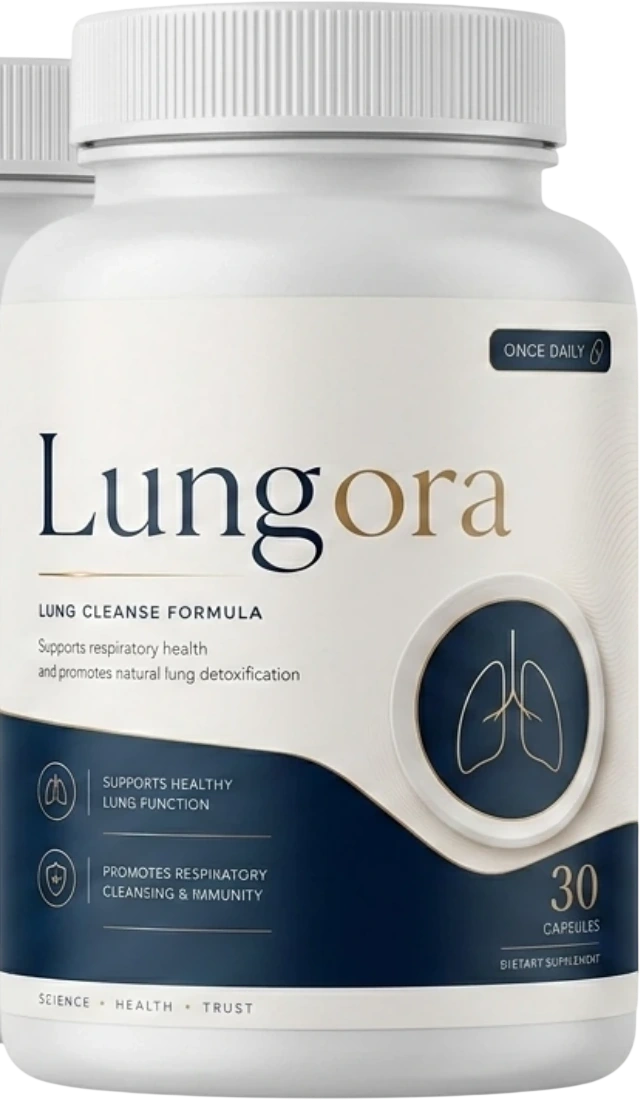
Turmeric has been a fixture of the kitchen and the traditional medicine cabinet for thousands of years, but the golden spice and the supplement on the shelf are not quite the same thing. The reason a respiratory-support formula such as Lungora lists curcumin rather than simply “turmeric” comes down to chemistry, concentration and absorption. This guide explains how curcumin works, why the phrase “turmeric curcumin for respiratory support” keeps company with black pepper, and exactly what a trustworthy label should tell you. It is general and traditional-use information, not medical advice or a claim to treat disease.
Turmeric versus curcumin: an important distinction
Turmeric (Curcuma longa) is the whole rhizome — the knobbly, bright-orange root you might grate into a curry. Inside that root is a family of compounds called curcuminoids, of which curcumin is the most abundant and by far the most studied. Here is the number that matters: curcuminoids make up only around 2 to 5 percent of raw turmeric by weight. So a teaspoon of culinary turmeric contains only a modest amount of the active compound. Why the distinction matters so much in practice — the raw spice delivers very little curcumin, and what it delivers is cleared quickly — is laid out in Bioavailability of curcumin: problems and promises (Mol Pharm, 2007).
A curcumin supplement solves that dilution problem by using a standardized extract, typically concentrated to about 95 percent curcuminoids. That single fact explains why you cannot judge a curcumin product by the word “turmeric” alone: a capsule of plain turmeric powder and a capsule of standardized curcumin extract can differ enormously in active content. When you read a label, this is the first thing to check.
The mechanism: how curcumin supports respiratory wellness
Curcumin is what scientists call a pleiotropic molecule — it interacts with many targets rather than a single one. Two of those roles line up neatly with why it appears in respiratory formulas. The breadth of the human literature, and how much of it remains preliminary, is surveyed in Curcumin: A Review of Its Effects on Human Health (Foods, 2017).
1. Supporting a balanced inflammatory response
The body’s inflammatory response is a healthy, necessary process — it is how tissues respond to irritants and recover. The goal is balance, not suppression. Curcumin has been studied for its interaction with signalling molecules involved in that response, most notably the NF-κB pathway, a kind of master switch for many inflammatory signals. In traditional use, turmeric has long been valued for helping the body maintain a comfortable, balanced response to the everyday irritants that air can carry. We describe this as general and traditional-use support, not treatment of any condition.
2. Antioxidant activity
Curcumin is also a direct antioxidant, and it appears to support the body’s own antioxidant enzymes. This is where it dovetails with the other actives on this blog: it complements the recycling antioxidant we cover in alpha lipoic acid for the lungs and the mineral role explained in magnesium glycinate for lung health. Antioxidants tend to work best as a network, each covering ground the others cannot.
The bioavailability problem — and why black pepper is the answer
Here is the single most important thing to understand about curcumin: on its own, it is notoriously hard for the body to use. Curcumin is poorly soluble in water, is not well absorbed from the gut, and what does get in is metabolised and cleared very quickly. Swallow plain curcumin and much of it simply passes through. The original piperine measurement in human volunteers is Influence of piperine on the pharmacokinetics of curcumin in animals and human volunteers (Planta Med, 1998) — a small study, and the source of the figure repeated on countless labels since.
This is where piperine, an alkaloid from black pepper, earns its place. Piperine slows the enzymes and transport processes that would otherwise break curcumin down and flush it out, and research has shown it can increase curcumin’s bioavailability many times over. That is why so many well-designed formulas pair curcumin with a small amount of black pepper extract — it is not a marketing flourish, it is solving a genuine absorption problem. Other approaches use specialised delivery systems (phospholipid complexes, nanoparticle or micellar forms) to achieve the same goal. When you see black pepper next to curcumin on an ingredient list, now you know why it is there.
Reading a curcumin label with confidence
Put the two ideas above together — concentration and absorption — and you have a simple checklist for any curcumin product:
- Standardization — does it say “standardized to 95% curcuminoids” (or a stated percentage), or just “turmeric powder”? The former tells you the active content; the latter does not.
- Milligrams per serving — the amount of curcumin extract you actually get, ideally stated openly rather than hidden inside a proprietary blend.
- Absorption enhancer — a named piperine (black pepper) extract such as a standardized 95% piperine, or a branded bioavailability technology.
- Whole-root context — some products include whole turmeric alongside the extract for the other curcuminoids; that is fine, as long as the active is standardized.
The same principle threads through every ingredient guide on this site: name the form, state the amount, and show how it is made usable. It is the difference between a label that informs you and one that hopes you will not look closely.
What Is Inside a Lungora Capsule
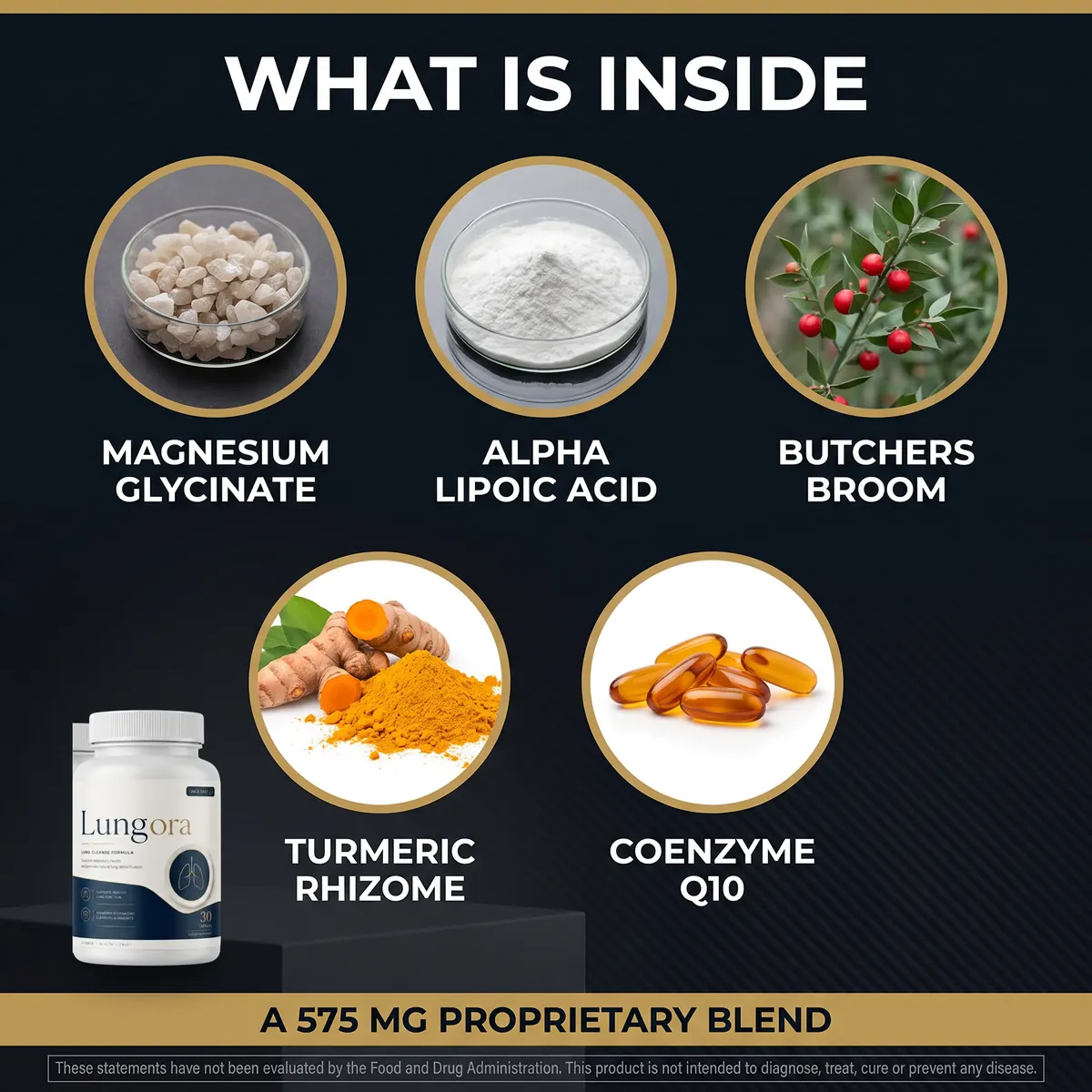
Lungora puts magnesium glycinate, alpha lipoic acid, butcher’s broom, L-carnitine, turmeric extract and CoQ10 in one capsule a day, labelled to support respiratory health, with a 60-day money-back guarantee from purchase.
Dosing context: how much is studied
Research doses of standardized curcumin extract span a wide range — commonly from a few hundred milligrams up to around a gram or more per day, almost always with an absorption enhancer, because unenhanced curcumin barely registers in the blood. In a multi-ingredient daily formula the amount of curcumin is usually more modest, because it is one active in a coordinated blend rather than a stand-alone high-dose product. As with the rest of the formula, the aim is steady daily support rather than a single large dose.
Curcumin has a long history of culinary use and is generally well tolerated. A few practical cautions are worth noting: because it can affect how the body handles blood clotting, people taking blood-thinning medication should check with a professional, as should anyone with gallbladder concerns, since turmeric can stimulate bile flow. Pregnant and breastfeeding women should stick to culinary amounts unless advised otherwise. None of this is alarming — it is the ordinary due diligence any potent botanical deserves.
From the spice rack to a formula
You can absolutely enjoy turmeric in cooking, and pairing it with black pepper and a little fat is a time-honoured way to get more from it. But the gap between culinary amounts and studied extract doses is exactly why curcumin appears in a focused supplement. In a respiratory routine it works alongside the other pieces we cover across this blog — the mineral, the recycling antioxidant, the energy nutrient and the circulatory botanical in our guide to butcher’s broom for circulation — and underneath all of them, the everyday habits in how to support healthy lung function naturally. To see how curcumin is combined with those actives in a single daily capsule, visit the Lungora home page. Its closest culinary relative gets the same treatment in ginger benefits for respiratory health — another rhizome whose active compounds change with processing.
Frequently asked questions
What is the difference between turmeric and curcumin?
Turmeric is the whole golden root, a common culinary spice. Curcumin is the most studied of its active compounds, the curcuminoids, which make up only a few percent of raw turmeric by weight. A supplement standardized to curcuminoids concentrates that active fraction, which is why the label wording matters.
How does curcumin support the respiratory system?
Curcumin is traditionally valued for supporting the body’s healthy, balanced response to everyday irritants, and it also acts as an antioxidant. In modern terms it interacts with signalling pathways involved in the body’s normal inflammatory response. This is general and traditional-use information, not a claim to treat any respiratory disease.
Why is black pepper added to curcumin supplements?
Curcumin on its own is poorly absorbed and rapidly cleared by the body. Piperine, a compound from black pepper, can substantially increase curcumin’s bioavailability by slowing how quickly it is broken down. That is why many formulas pair curcumin with piperine or use a specially formulated extract.
What should a good curcumin label show?
Look for the extract standardized to a stated percentage of curcuminoids (often around 95 percent), the milligrams of extract per serving, and any absorption enhancer such as piperine or a branded delivery system. Vague wording like “turmeric powder” with no standardization tells you far less.
How much curcumin do studies use?
Research doses of standardized curcumin extract vary widely, commonly from a few hundred milligrams up to around a gram or more per day, often with an absorption enhancer. In a daily multi-ingredient formula the amount is typically lower because curcumin is one of several actives. Follow the label and ask a professional if you are unsure.
Can I just use kitchen turmeric instead?
Culinary turmeric is a wonderful spice and worth using, especially with black pepper and a little fat. But because curcuminoids are only a small fraction of the root, the amount in cooking is far below the standardized-extract doses studied. That gap is the reason concentrated curcumin appears in supplements.
About the Lungorae Editorial Desk
The Lungorae Editorial Desk is an independent group of wellness writers and reviewers focused on respiratory nutrition. We translate primary sources — government nutrition bodies, peer-reviewed literature and established reference texts — into plain, practical guidance, and we review each article for accuracy before publication. We do not provide medical advice; our aim is to help you ask better questions and read labels with confidence. Have a correction or a source to suggest? Write to the editor through the contact page.
References
- Influence of piperine on the pharmacokinetics of curcumin in animals and human volunteers — Shoba G et al., Planta Medica, 1998.
- Bioavailability of curcumin: problems and promises — Anand P et al., Molecular Pharmaceutics, 2007.
- Curcumin: A Review of Its Effects on Human Health — Foods, 2017.
- Turmeric — National Center for Complementary and Integrative Health.
Every PubMed identifier above was checked against its NCBI record when this guide was written, so each link opens the paper it is named as. Research on an ingredient is not research on a finished product, and none of these studies tested the Lungora capsule.
† These statements have not been evaluated by the FDA. This product is not intended to diagnose, treat, cure or prevent any disease. This article is for general information only and is not medical advice; new or worsening breathlessness needs a doctor, not a supplement. Affiliate disclosure: this is an independent guide, not the manufacturer or seller, and some links here earn us a commission at no extra cost to you.