Quercetin Benefits for Respiratory Health: Mast Cells and Dosing
| What it is | A plant flavonoid — the natural pigment in onions, apples, capers and berries — and one of the most studied antioxidants in food. |
| Why for breathing | It has been studied for its effect on mast cells, the immune cells that release histamine, so it is popular for seasonal and respiratory wellness support. |
| The catch | Plain quercetin absorbs poorly, so good formulas use enhanced forms or pair it with vitamin C or bromelain. |
| Label tip | Check the form (dihydrate, isoquercitrin, phytosome) and the milligrams per serving, and look for absorption partners. |
If you have ever wondered why nutritionists keep telling you to eat colourful plants, quercetin is a large part of the answer. It is one of the most abundant flavonoids in the human diet and one of the most heavily researched, and in the respiratory-wellness world it has earned a particular reputation as a natural bioflavonoid for seasonal support. In this guide we explain the real quercetin benefits for respiratory health, walk through the mast-cell mechanism in plain language, and — crucially — explain the bioavailability problem that separates a good quercetin product from a disappointing one. This is general educational information about how the ingredient works, not medical advice or a promise to treat anything.
What quercetin actually is
Quercetin belongs to a family of plant compounds called flavonoids, which are the natural pigments that give many fruits, vegetables and flowers their colour. Within that family it is a flavonol, and it is genuinely everywhere in a healthy diet: red and yellow onions are famously rich in it, along with apples (especially the skin), capers, kale, berries, broccoli, grapes, green tea and buckwheat. Plants make it partly as their own defence against ultraviolet light and stress, and that protective, antioxidant character carries over when we eat it.
As an antioxidant, quercetin helps the body neutralise reactive molecules and, like the rest of the flavonoid family, supports the network of defences that keep oxidative stress in balance. But the reason it stands out for respiratory wellness specifically is a second, more targeted action on the immune cells that govern histamine.
The mechanism: how quercetin supports respiratory health
To understand quercetin’s appeal, you have to meet the mast cell. Mast cells are immune sentinels stationed throughout the tissues that meet the outside world — the lining of the nose, the sinuses, the airways and the gut. When they are triggered, they release a burst of signalling chemicals, the most famous of which is histamine, producing the familiar cascade of a runny nose, watery eyes and congestion. This response is useful in principle but uncomfortable when it over-fires, as it does in the pollen-heavy months. The mast-cell work behind the popular description is laboratory work on cells, for example Flavonoids inhibit histamine release and expression of proinflammatory cytokines in mast cells (Arch Pharm Res, 2008).
1. Stabilising the mast cell
Quercetin has been studied for its ability to help stabilise mast cells — that is, to make them a little less quick to release their histamine payload. Researchers sometimes describe it as a natural mast-cell stabiliser or bioflavonoid, and it is this property that has driven its popularity for seasonal and respiratory wellness. For everyday purposes the framing is important: this is a mechanistic, general-wellness observation, not a claim that quercetin treats allergies or any medical condition. In human mast cells specifically, the effect on mediator release and intracellular calcium was measured in Flavonols inhibit proinflammatory mediator release, intracellular calcium ion levels and protein kinase C theta phosphorylation in human mast cells (Br J Pharmacol, 2005) — cells in a dish, at concentrations a capsule may never reach in tissue.
2. Antioxidant and free-radical support
On top of the mast-cell angle, quercetin is a capable antioxidant in its own right, helping the airways manage the oxidative load they meet from air, pollution and ordinary metabolism. This is the same reasoning behind pairing it with other antioxidants in a formula — the whole network works better together, a theme we explore in our guide to alpha lipoic acid and the antioxidant network.
The bioavailability problem — and how good formulas solve it
Here is the single most important thing to understand about quercetin as a supplement: plain quercetin is poorly absorbed. It does not dissolve well in water, and only a modest fraction of a standard dose makes it into the bloodstream intact. A cheap product that simply lists a big milligram number of raw quercetin may deliver far less to your cells than the label implies. This is the same bioavailability lesson we cover for another plant active in our piece on turmeric curcumin for respiratory support — with these compounds, how well it absorbs matters as much as how much is in the capsule. That gap between dose swallowed and quercetin measured in blood was quantified across formulations in Comparison of quercetin pharmacokinetics following oral supplementation in humans (J Food Sci, 2012).
Thoughtful formulas answer the problem in one of two ways:
- Absorption partners. Quercetin is classically paired with vitamin C (which supports its antioxidant activity) and with bromelain, an enzyme from pineapple that is thought to aid its uptake. This is why you so often see the three together.
- Enhanced forms. Newer versions are engineered to dissolve and absorb better — enzymatically modified isoquercitrin (EMIQ), plain isoquercitrin (a glycoside form), and phytosome preparations that bind quercetin to a phospholipid. These typically achieve more in the bloodstream from a smaller dose.
What Is Inside a Lungora Capsule
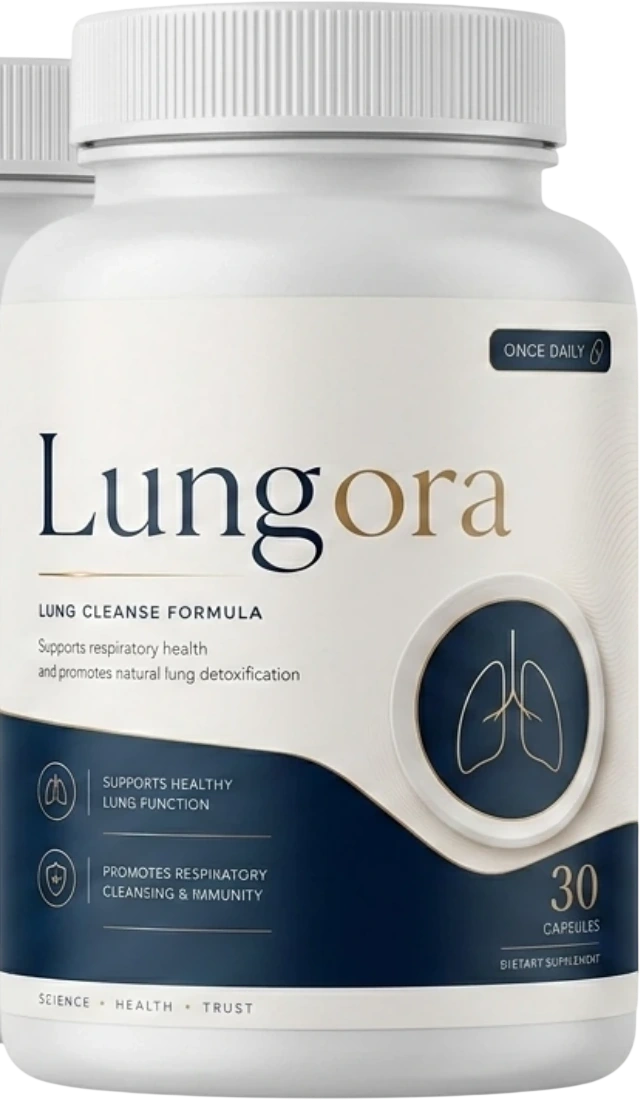
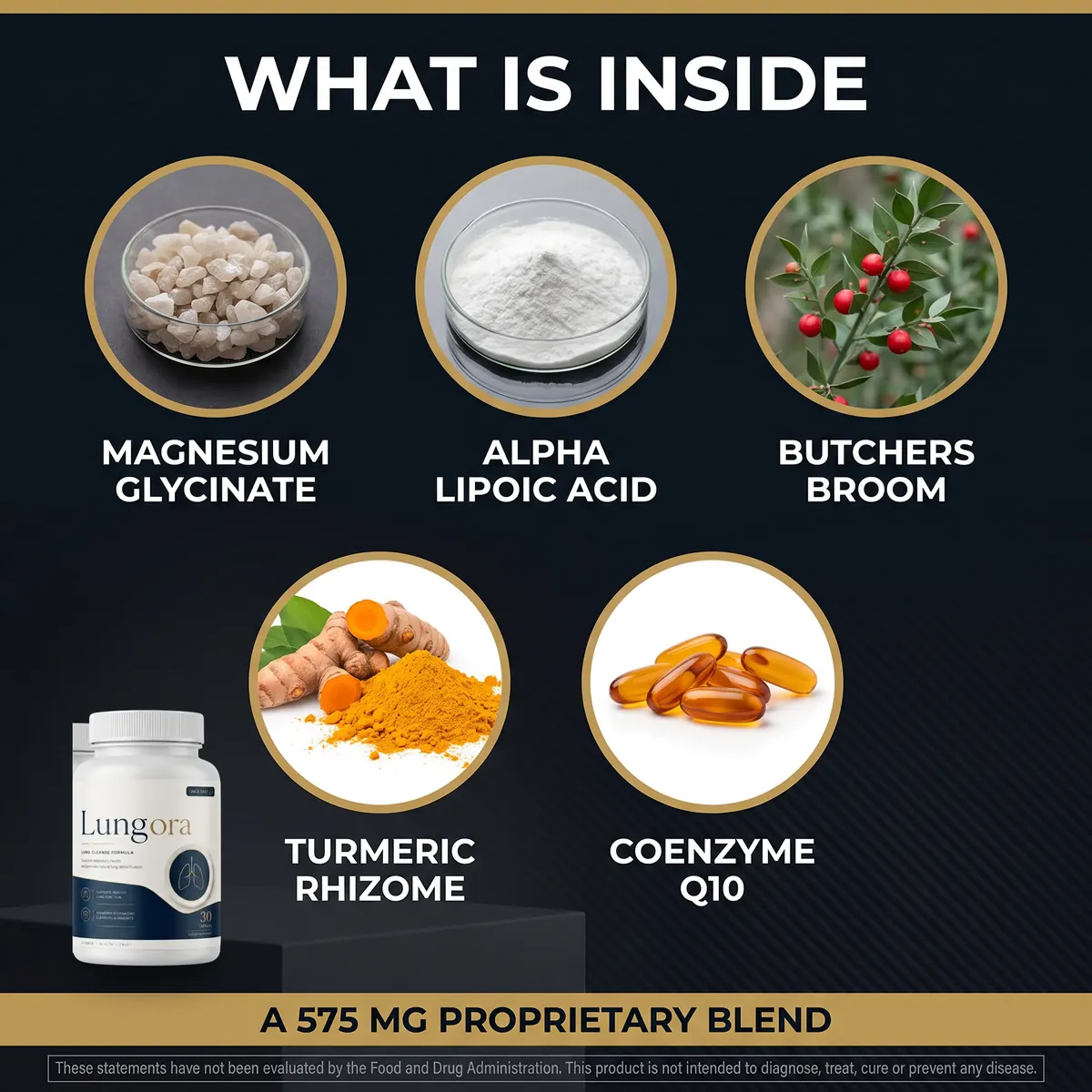
Lungora puts magnesium glycinate, alpha lipoic acid, butcher’s broom, L-carnitine, turmeric extract and CoQ10 in one capsule a day, labelled to support respiratory health, with a 60-day money-back guarantee from purchase.
Dosing context: how much and when
In the research literature, supplemental quercetin is most often studied in the range of roughly 500 to 1000 mg per day, frequently divided into two servings. Enhanced-absorption forms are sometimes used at lower amounts because more of the dose actually reaches the bloodstream. In a multi-ingredient daily formula the quercetin quantity is usually toward the lower end, because it is one of several actives working together rather than a stand-alone high-dose product.
Quercetin is generally well tolerated, which is unsurprising given that we eat it every day in ordinary food. Very high, long-term supplemental doses are less well studied, and because quercetin can interact with the way the body processes certain medications, anyone on prescription drugs or with kidney concerns should check with a healthcare professional before adding a concentrated supplement. As always, stay within the amount on the label.
What to look for on a quercetin label
The label principle we apply across this site — name the form, state the amount — is especially useful for quercetin, because the form is doing so much of the work:
- The form. Quercetin dihydrate is the standard, well-researched raw form. Isoquercitrin, EMIQ and phytosome versions are designed for better absorption — a real point of difference worth noticing.
- Milligrams per serving. A clear number beats an ingredient hidden inside a proprietary blend where you cannot see how much is present.
- Absorption partners. The presence of vitamin C or bromelain tells you the formulator has thought about uptake, not just the headline number.
- Sensible serving format. A once-daily capsule combining quercetin with complementary actives is a different product from a high-dose single-ingredient tub — choose to match how you want to use it.
Where your body already gets it
Because quercetin is a food compound first and a supplement second, the most natural way to raise your intake is on your plate. Onions — particularly red onions and the outer layers — are among the richest sources, followed by apples with the skin on, capers, kale, berries, broccoli and green tea. A colourful, plant-heavy diet supplies a steady background of quercetin and its flavonoid relatives. Supplements are used when someone wants a more concentrated, consistent amount, particularly through the seasons when respiratory comfort is top of mind. As with every nutrient on this site, the supplement complements good eating rather than replacing it.
How quercetin fits the bigger picture
Quercetin is a good illustration of why we take the ingredient-and-mechanism approach: the same milligram figure can mean very different things depending on the form and its absorption partners. In a respiratory-support routine it sits alongside the minerals, antioxidants and botanicals we cover across this blog, and behind all of them are the everyday habits — clean air, movement, hydration and an antioxidant-rich plate — that we set out in how to support healthy lung function naturally. To see how these plant actives are combined into a single daily capsule, visit the Lungora home page. It is frequently paired with the pineapple enzyme in our bromelain guide, and it belongs to the same warming-botanical conversation as ginger benefits for respiratory health.
Frequently asked questions
What is quercetin?
Quercetin is a plant flavonoid, a natural pigment found in foods such as onions, apples, capers, berries and leafy greens. It acts as an antioxidant and is one of the most studied flavonoids in nutrition. This is general information and not a treatment claim.
Why is quercetin linked with respiratory health?
Quercetin has been studied for its effect on mast cells, the immune cells that release histamine, which is why it is often described as a natural bioflavonoid for seasonal and respiratory wellness support. It is used for general wellness, not to treat allergies or any disease.
Why does quercetin have low bioavailability?
Plain quercetin is poorly soluble in water and only a fraction is absorbed from the gut. That is why formulas often pair it with vitamin C or bromelain, or use enhanced forms such as enzymatically modified isoquercitrin or a phytosome, which are designed to absorb better.
How much quercetin do people usually take?
Supplement doses in the research literature commonly range from about 500 to 1000 mg per day, sometimes split into two servings. Enhanced-absorption forms may use lower amounts. In a multi-ingredient formula the quantity is usually lower because quercetin is one of several actives.
What should I look for on a quercetin label?
Check the form and the milligrams per serving. Standard quercetin dihydrate is common and well researched; enhanced forms such as isoquercitrin or a phytosome are designed for better absorption. Pairing with vitamin C or bromelain is a sign the formula is thinking about uptake.
Is quercetin safe to take daily?
Quercetin is generally well tolerated at typical supplement amounts and is present in everyday foods. Very high long-term doses are less well studied, and anyone with kidney concerns or taking prescription medication should check with a healthcare professional first. Stay within the label amount.
Quercetin is not an ingredient in Lungora. This guide covers it as background on lung health. Lungora’s label lists magnesium glycinate, alpha lipoic acid, butcher’s broom, L-carnitine, turmeric extract and coenzyme Q10.
About the Lungorae Editorial Desk
The Lungorae Editorial Desk is an independent group of wellness writers and reviewers focused on respiratory nutrition. We translate primary sources — government nutrition bodies, peer-reviewed literature and established reference texts — into plain, practical guidance, and we review each article for accuracy before publication. We do not provide medical advice; our aim is to help you ask better questions and read labels with confidence. Have a correction or a source to suggest? Write to the editor through the contact page.
References
- Flavonols inhibit proinflammatory mediator release, intracellular calcium ion levels and protein kinase C theta phosphorylation in human mast cells — British Journal of Pharmacology, 2005.
- Flavonoids inhibit histamine release and expression of proinflammatory cytokines in mast cells — Archives of Pharmacal Research, 2008.
- Comparison of quercetin pharmacokinetics following oral supplementation in humans — Journal of Food Science, 2012.
Every PubMed identifier above was checked against its NCBI record when this guide was written, so each link opens the paper it is named as. Research on an ingredient is not research on a finished product, and none of these studies tested the Lungora capsule.
† These statements have not been evaluated by the FDA. This product is not intended to diagnose, treat, cure or prevent any disease. This article is for general information only and is not medical advice; new or worsening breathlessness needs a doctor, not a supplement. Affiliate disclosure: this is an independent guide, not the manufacturer or seller, and some links here earn us a commission at no extra cost to you.