Bromelain Benefits for Respiratory Health: The Pineapple Enzyme Explained
| What it is | A group of protein-digesting enzymes drawn from the stem and fruit of the pineapple. |
| Why for breathing | It is traditionally used as a mucolytic to thin and loosen mucus, and it is studied for the body’s normal inflammatory balance — both relevant to clear sinuses and easy breathing. |
| Potency unit | Read the GDU (or MCU) figure, not just the milligrams — it measures enzyme activity. |
| Timing tip | Between meals for systemic and respiratory support; with meals for digestion. |
Pineapple has a reputation that goes well beyond dessert. The reason is bromelain — a family of enzymes that gives the fruit its faint sting on the tongue and its long history in traditional remedies for congestion and swelling. In modern supplements, bromelain shows up in digestive blends, joint formulas and, of interest here, respiratory products aimed at clear sinuses and comfortable breathing. This guide explains what bromelain actually is, how it is thought to work for respiratory health, why its potency is measured so strangely, and what to look for on a label. It is general educational information about how the enzyme works, not medical advice or a promise to treat any condition.
What bromelain actually is
Bromelain is not a single molecule but a mixture of proteolytic enzymes — proteases — extracted from Ananas comosus, the pineapple. Proteolytic simply means protein-cutting: these enzymes snip the long chains of amino acids that make up proteins into smaller pieces. Two sources are used commercially. Fruit bromelain comes from the flesh, while stem bromelain comes from the stalk that is normally discarded, and it is the more concentrated and more commonly supplemented form. The enzyme family, how it is extracted from stem and fruit, and what it does once swallowed are surveyed in Bromelain: a review of its mechanisms, pharmacological effects and potential applications (Food Funct, 2023).
Because it is an enzyme rather than a vitamin or mineral, bromelain behaves differently from most ingredients on this site. Its value depends on it staying active — on arriving where it is needed with its protein-cutting ability intact — which is why manufacturing quality and the way you take it both matter more than usual. That activity focus is also why the amount on the label is expressed in unusual units, a point we return to below.
The mechanism: how bromelain supports respiratory wellness
Bromelain is discussed for breathing along two connected lines, both rooted in that same enzymatic activity.
1. Thinning and loosening mucus
The classic respiratory role for bromelain is as a mucolytic. Mucus is largely made of long, sticky glycoprotein chains, and proteolytic enzymes are thought to help break those chains down, lowering the viscosity of secretions so they are easier to clear from the nose, sinuses and airways. This is the same practical goal — thinner, more mobile mucus — that people look for from the sulphur chemistry we describe in our guide to NAC benefits for lungs and mucus, though bromelain reaches it by a different route. That oral bromelain reaches sinonasal tissue at all was measured directly in Bromelain’s penetration into the blood and sinonasal mucosa in patients with chronic rhinosinusitis (Acta Otorhinolaryngol Ital, 2018) — a small study in patients, and the kind of evidence that makes the mucus claim plausible rather than proven.
2. Supporting the body’s normal inflammatory balance
Bromelain has also been studied for its influence on the mediators that govern the body’s normal inflammatory response, including its effect on compounds such as bradykinin and certain prostaglandins. In the respiratory context this matters because comfortable sinuses and airways depend on that balance being well regulated. Research into bromelain and post-operative or sinus-related swelling is one reason it earned a place in respiratory formulas, though this describes a general structure-and-function role rather than a claim to treat sinusitis or any illness.
3. Helping other actives do their job
One of bromelain’s most useful supporting roles is as a partner ingredient. It is frequently paired with the flavonoid quercetin because it is thought to support that compound’s absorption, which is otherwise a weak point. If you have read our explainer on quercetin benefits for respiratory health, the bromelain-and-quercetin duo will be familiar — it is one of the most common combinations in the respiratory and seasonal-wellness aisle.
Why bromelain is measured in GDU, not milligrams
Here is the single most important label lesson with bromelain. Because it is an enzyme, its usefulness is about activity, not weight. Two capsules can both say “500 mg bromelain” and yet differ enormously in how much protein-cutting they can actually do, depending on how the enzyme was processed. To capture that, potency is expressed in activity units: Activity units, and why two products with identical milligram figures need not be equivalent, are discussed in Exploring the Therapeutic Potential of Bromelain: Applications, Benefits, and Mechanisms (Nutrients, 2024).
- GDU — gelatin digesting units, the most common measure, usually quoted per gram (for example, 2,400 GDU/g).
- MCU — milk clotting units, an older measure; roughly speaking, GDU figures are about 1.5 times higher than the equivalent MCU figure.
The practical upshot: a reputable label states both the milligram amount and the GDU (or MCU) activity. A smaller milligram dose at high potency can out-perform a larger dose of a weak, low-activity extract. If a product lists only milligrams and no activity unit at all, you cannot tell what you are getting — and for an enzyme, that is the number that counts.
What Is Inside a Lungora Capsule
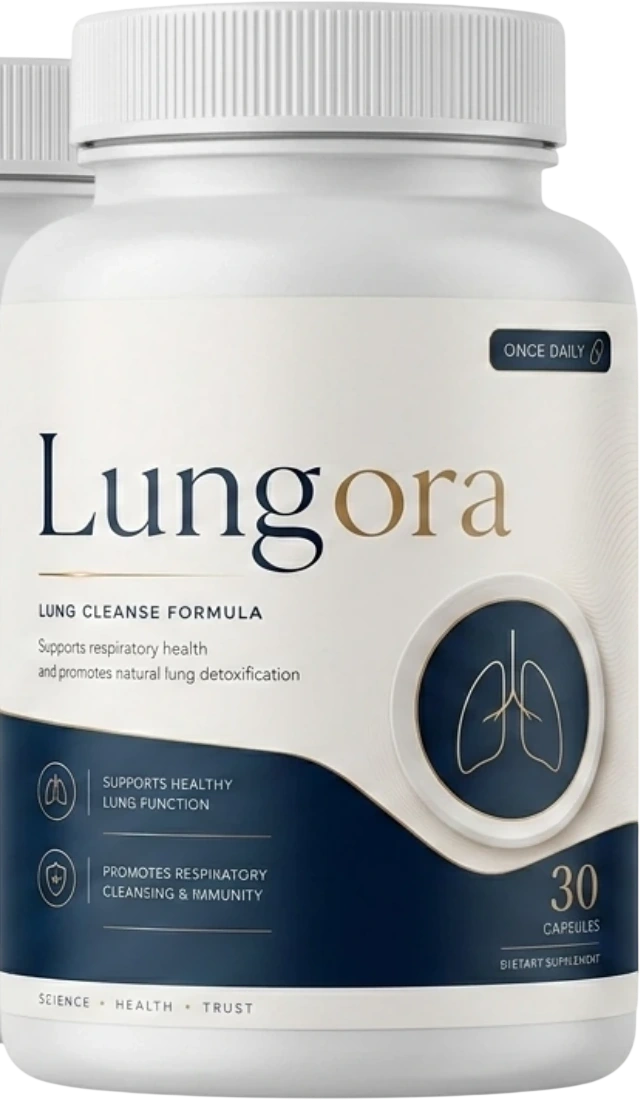
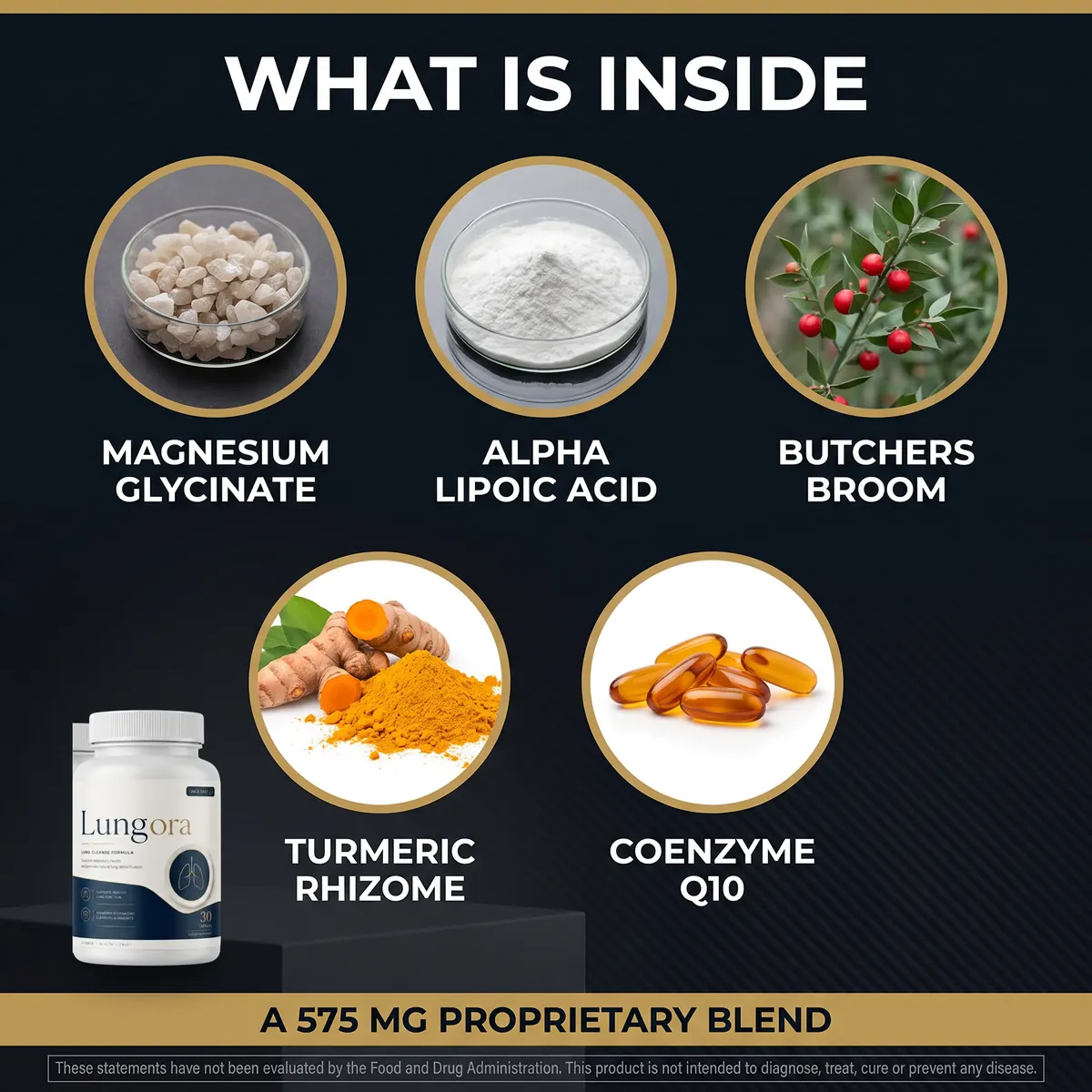
Lungora puts magnesium glycinate, alpha lipoic acid, butcher’s broom, L-carnitine, turmeric extract and CoQ10 in one capsule a day, labelled to support respiratory health, with a 60-day money-back guarantee from purchase.
Dosing context: how much and when
Supplemental bromelain is typically taken in the range of roughly 200 to 2,000 mg per day, at potencies commonly between 1,200 and 2,400 GDU per gram, often split across two or three doses. The right amount depends on the goal, and so does the timing — and timing is where bromelain is genuinely unusual:
- Between meals (empty stomach) for systemic and respiratory support. Taken away from food, more of the enzyme is absorbed intact into the body rather than being spent digesting your last meal.
- With meals if the aim is digestive support, so the enzyme can act on the proteins in that food.
This split explains why the same ingredient turns up in both digestive and respiratory products with the same label but different instructions. As with every active we cover, start at the lower end and give any new addition time before judging it.
Safety, interactions and who should be careful
Bromelain is generally well tolerated, but a few points deserve attention. Because it is derived from pineapple, anyone with a pineapple or latex allergy should avoid it. As a proteolytic enzyme with mild effects on the way blood clots, bromelain may add to the action of blood-thinning medicines such as warfarin and some antiplatelet drugs, so it is often advised to pause it before surgery. It can also increase the absorption of certain antibiotics, which sounds helpful but means blood levels of those drugs may rise unexpectedly. At high doses some people notice mild digestive upset. None of this makes bromelain risky for most healthy adults, but it is exactly the sort of ingredient worth mentioning to a pharmacist or doctor if you take regular medication.
What to look for on a bromelain label
- An activity unit. Look for GDU or MCU, ideally alongside the milligram amount. No activity figure, no way to judge potency.
- Source. Stem bromelain is the concentrated, standard supplement form.
- Sensible pairings. Many respiratory and seasonal formulas combine it with quercetin; a small amount of bromelain is often there to support that partner.
- Clean manufacturing. Because enzyme activity is fragile, a product made to good manufacturing standards is worth favouring.
Where your body already gets it
Fresh pineapple — especially the core, and the fruit closest to the stem — is the natural source, which is why fresh pineapple juice has folk-remedy status for coughs and congestion. Cooking and canning largely destroy the enzyme, though, so tinned pineapple offers little bromelain activity. A concentrated supplement delivers far more than you could reasonably eat, which is the point of standardising it. As always, this complements a good diet and sensible habits rather than replacing them.
How bromelain fits the bigger picture
Bromelain is a specialist rather than an all-rounder: an enzyme whose job is to make mucus more mobile and to support the body’s normal inflammatory balance, often while helping a companion active work better. It sits comfortably alongside the mucus chemistry of our NAC guide, the histamine angle of quercetin, and the antioxidant story in our turmeric and curcumin explainer. Underpinning all of them are the everyday habits — good food, movement, hydration, clean air and rest — that we set out in how to support healthy lung function naturally. To see how daily actives are combined into a single capsule, visit the Lungora home page. For the traditional herbal approach to the same congestion, see mullein leaf benefits for lungs, and for the warming-spice angle, ginger benefits for respiratory health.
Frequently asked questions
What is bromelain and where does it come from?
Bromelain is a group of protein-digesting (proteolytic) enzymes extracted from the stem and fruit of the pineapple. Supplements usually use stem bromelain, which is more concentrated. This is general educational information, not a treatment claim.
How does bromelain support respiratory health?
Bromelain is traditionally valued as a mucolytic that can help thin and loosen mucus, and it is studied for its role in the body’s normal inflammatory balance. Both actions are why it appears in formulas aimed at clear breathing and comfortable sinuses.
Why is bromelain measured in GDU instead of milligrams?
Because bromelain is an enzyme, what matters is its activity, not just its weight. GDU (gelatin digesting units) and MCU (milk clotting units) measure that activity. A smaller milligram dose with high GDU can be more active than a larger dose with low potency.
Should bromelain be taken with or without food?
For digestive support it is taken with meals so it can act on food proteins. For systemic or respiratory support, it is usually taken between meals on an empty stomach so more of the enzyme is absorbed intact rather than used up on digestion.
Does bromelain pair well with quercetin?
Yes, the two are a classic combination. Bromelain is often included alongside quercetin because it is thought to support the flavonoid’s absorption, and both are discussed for the body’s normal histamine and inflammatory response.
Who should be cautious with bromelain?
Anyone allergic to pineapple should avoid it, and because bromelain may add to the effect of blood-thinning medicines and some antibiotics, people taking those, or planning surgery, should speak with a healthcare professional first.
Bromelain is not an ingredient in Lungora. This guide covers it as background on lung health. Lungora’s label lists magnesium glycinate, alpha lipoic acid, butcher’s broom, L-carnitine, turmeric extract and coenzyme Q10.
About the Lungorae Editorial Desk
The Lungorae Editorial Desk is an independent group of wellness writers and reviewers focused on respiratory nutrition. We translate primary sources — government nutrition bodies, peer-reviewed literature and established reference texts — into plain, practical guidance, and we review each article for accuracy before publication. We do not provide medical advice; our aim is to help you ask better questions and read labels with confidence. Have a correction or a source to suggest? Write to the editor through the contact page.
References
- Bromelain: a review of its mechanisms, pharmacological effects and potential applications — Food & Function, 2023.
- Exploring the Therapeutic Potential of Bromelain: Applications, Benefits, and Mechanisms — Nutrients, 2024.
- Bromelain’s penetration into the blood and sinonasal mucosa in patients with chronic rhinosinusitis — Acta Otorhinolaryngologica Italica, 2018.
Every PubMed identifier above was checked against its NCBI record when this guide was written, so each link opens the paper it is named as. Research on an ingredient is not research on a finished product, and none of these studies tested the Lungora capsule.
† These statements have not been evaluated by the FDA. This product is not intended to diagnose, treat, cure or prevent any disease. This article is for general information only and is not medical advice; new or worsening breathlessness needs a doctor, not a supplement. Affiliate disclosure: this is an independent guide, not the manufacturer or seller, and some links here earn us a commission at no extra cost to you.